
Malaysian investigators had found the two pieces were consistent with panels from a Malaysia Airlines Boeing 777 aircraft.

India isn't Israel, nor can it, or should be, says Shekhar Gupta.

Any NGO critical of the government is unlikely to receive a green signal. The new amendment will leave NGOs vulnerable to harassment. It was the NGO sector that helped provide compassion and food to millions of people during the lockdown. The new Bill will render such cooperation and camaraderie impossible in future, observes Rashme Sehgal.

"Talks are the only option," Mehbooba said. "How long can you have a confrontation?"
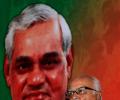
'Advani went by the book, by files, by advice given by his babus. He may be well read and articulate and a pleasant conversationalist, but none of that makes for the kind of creative politician that Vajpayee was.' 'This is the kind of observation about the Vajpayee premiership, more than the promise of espionage or Kashmir gossip, that made writing A S Dulat's book a satisfying experience,' says Aditya Sinha.

The bravado of NDA ministers may have undone the gains made in cross-border security cooperation over the past several years.

The counter-insurgency operation on the Indo-Myanmar was under planning for the last three months. The June 4 ambush that killed 18 Indian soldiers only hastened the attack. Sheela Bhatt provides exclusive details of the planning for the operation.

'It would not be incorrect to say that the Chinese-Pakistani strategy of containing India began in the aftermath of the 1965 war.'
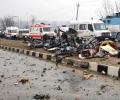
'A resurgent Jaish could be a reflection of the Pakistani security establishment's view that with the region moving ever closer to a post-US Afghanistan, it is time to redirect attention to Kashmir.'

'Kulbhushan Jadhav is a very sad case.' 'I think Pakistan handled this issue very clumsily.' 'They gave too much of publicity and also said that they will hang him.' 'Now obviously, they are not going to hang him.'

'He knows India is going nowhere.' 'India will never let go of Kashmir, so he wants to settle with India.' 'Settle honourably with peace, dignity and justice.'
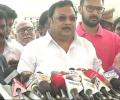
Calculated or otherwise, if Azhagiri's firing of the first salvo after Karunanidhi's death does not create some space for him to politico-electorally exploit at a later date, there may not be any space left for him at all, says N Sathiya Moorthy.

India has moved down from 32nd place last year and remains classified among 'flawed democracies'.

'Against the backdrop of difficult administrative, political and economic problems, Imran's temperament and staying power will be the subject of intense expectation and public scrutiny,' says Rana Banerji, who headed the Pakistan Desk at the Research and Analysis Wing, India's external intelligence agency.

'They have realised that class war is not possible in India, so they are trying to bring about a caste war.'

Yakub Memon's mercy petition was rejected hours before he is scheduled to hang by a three-member bench amid high drama that saw the Supreme Court throwing its doors open in the middle of the night in an unprecedented move.

Barring any last-minute reprieve, Yakub Memon, the lone death row convict in the March 12, 1993 Mumbai blasts case, will be hanged at 7 am on Thursday morning.
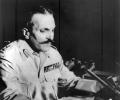
29 years ago this August, Pakistan's dictator, the general who made jihad part of Pakistani State policy, died in a mysterious air crash. Did the KGB, the then USSR's dreaded espionage agency, assassinate Zia-ul Haq? Was India's RA&W responsible for blowing Zia's military aircraft out of the skies? Was it Zia's many enemies in Pakistan's military? Was it a box of mangoes as Mohammad Hanif speculated in his fascinating novel about Zia's death? Or was the assassin someone else?
29 years ago this August, Pakistan's dictator, the general who made jihad part of Pakistani State policy, died in a mysterious air crash. Did the KGB, the then USSR's dreaded espionage agency, assassinate Zia-ul Haq? Was India's RA&W responsible for blowing Zia's military aircraft out of the skies? Was it Zia's many enemies in Pakistan's military? Was it a box of mangoes as Mohammad Hanif speculated in his fascinating novel about Zia's death? Or was the assassin someone else?
29 years ago this August, Pakistan's dictator, the general who made jihad part of Pakistani State policy, died in a mysterious air crash. Did the KGB, the then USSR's dreaded espionage agency, assassinate Zia-ul Haq? Was India's RA&W responsible for blowing Zia's military aircraft out of the skies? Was it Zia's many enemies in Pakistan's military? Was it a box of mangoes as Mohammad Hanif speculated in his fascinating novel about Zia's death? Or was the assassin someone else?

The clichd path of conducting 'uninterrupted and uninterruptable' bilateral dialogue with Pakistan to improve ties remains unimplemented and un-implementable under prevailing circumstances that are unlikely to alter in the near future, says Rahul Bedi.
The Indian Army and more recently the Indian Navy have already set up dedicated intelligence branches. It is surprising indeed that the IAF, where real time and timely intelligence is most vital for effective and safe prosecution of the air war, has still not done so itself, says Group Capt (retd) P I Muralidharan.

'Pakistan has worsted India in the Afghan proxy war and the defeat becomes a template of regional politics,' points out Ambassador M K Bhadrakumar.

When people say the two-day visit was been successful in taking back the bilateral relationship to the political plane, essentially the reference (mostly left unsaid) is to the wresting of initiative from the intelligence 'agencies', whose meddling had hurt bilateral ties, says the distinguished editor Kanak Mani Dixit.

'Once the violence is contained, the politicians must play their role, but unfortunately that is not happening.'

Saroj Kumar Rath, author of the newly-published book Fragile Frontiers: The Secret History of Mumbai Terror Attacks, speaks to Rediff.com's Vicky Nanjappa.
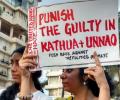
'They have no other agenda, but to perpetuate hate.' 'They have destroyed the economy and polity and they survive only on hate.' 'They think through hatred, they can mobilise the large chunk of Hindu votes.'

'While military acts such as the Uri surgical strikes are one option, cultural, economic and diplomatic isolation should also be part of the arsenal,' argues Sankrant Sanu.

Read what the ex-chief of R&AW, A S Dulat, told our readers on Rediff Chat!

The Ambedkar-Periyar Study Circle explains their side of the story which saw the IIT-Madras student body being de-recognized for violation of code of conduct and misuse of privileges.

Externally, the global economy is stabilising, with better growth is expected this year.

'What we are trying for is to make space travel easier like air travel.' 'We have already established ourselves... the fact that other countries are coming to seek our help shows our technology is mature.'

Mohammad Sajjad salutes the memory of Mushirul Hasan -- historian, thinker, academic, institution builder, -- who passed into the ages this week.

'Dulat's professional successors in the game would now find it that much harder to access/create meaningful sources/assets needed for effective functioning in a place like Kashmir. By blowing their cover the former top spy has undone whatever he might have been able to add to his organisation's resource kitty.'

'Engagement should never stop.' 'Reassure Kashmiris that they will be treated at par with the rest of India.' 'The peace you crave will be peace with honour.' 'Your special status will not be tinkered with.'

'Jinnah developed a belief that Gandhi had stolen the tag of the leader of the Indian people from him and that he later used religion to reduce Gandhi's idea of a united India to naught was his revenge.'

'The ISI doesn't trust the Kashmiris. They hate them...' 'We can never take Kashmir for granted, so there is that element of unpredictability. Anything can happen anytime.' 'The next chief minister will still be from the Valley. Even if a BJP chief minister or a BJP chosen candidate comes, he will be from the Valley. And he will be a Muslim.' A S Dulat, the former R&AW chief, on why he is perplexed by the BJP's Mission 44 plan for the J&K assembly election.

Countries in the region like Afghanistan, Pakistan and Maldives face serious existential threats from a mix of terrorist groups active in the region and elsewhere

In perhaps the first major conference on the United States-India strategic partnership in the aftermath of the Khobragade controversy that plunged the bilateral relationship in a downward spiral and is now in the process of being resurrected, the undeniable consensus among the panelists and participants was that much ballyhooed strategic convergence between Washington and New Delhi has dissipated.

'AI will be bigger than the advent of the Internet or the harnessing of electricity.' 'India must embrace it with all its might,' says NITI Aayog CEO Amitabh Kant.
